Effective Vocabulary Acquisition Techniques for Middle and High School
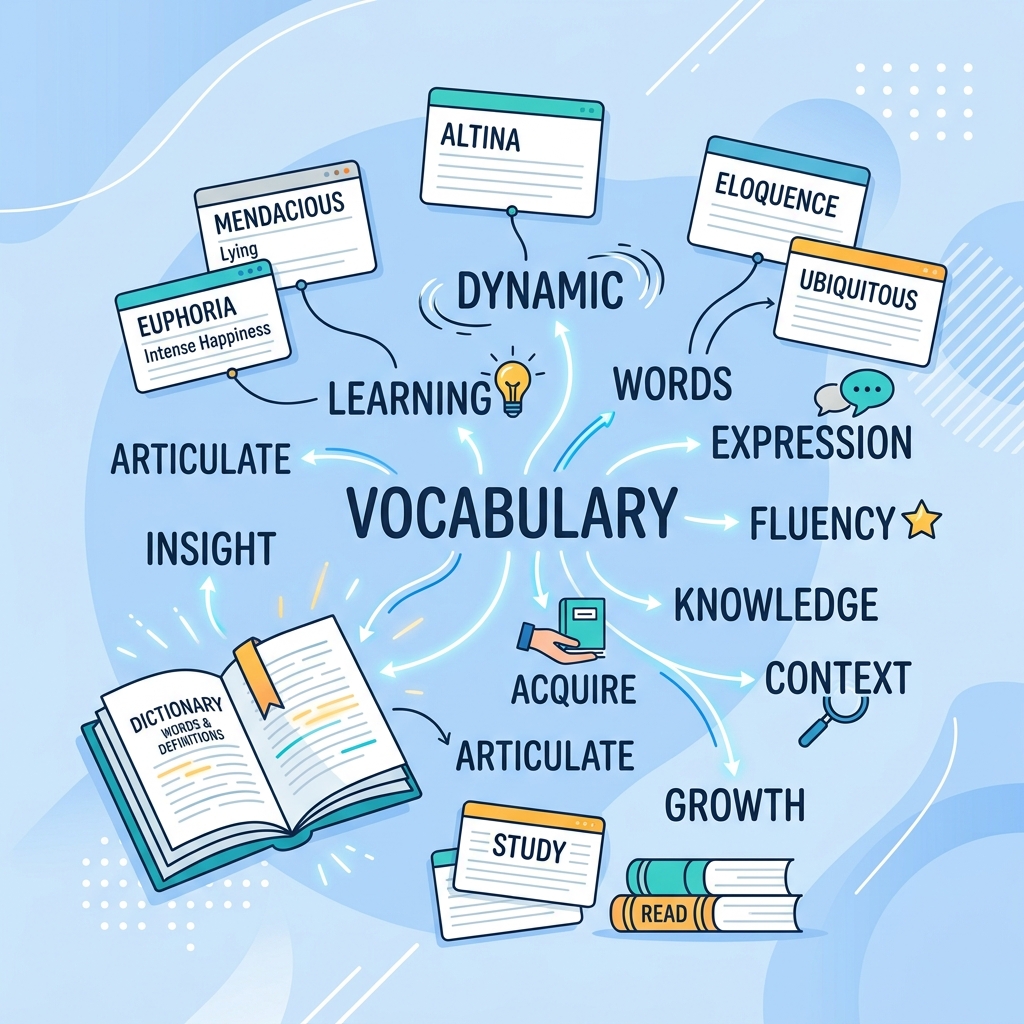
Every subject has its own vocabulary. Whether it is "photosynthesis" in biology or "juxtaposition" in English, students must master these words to understand the course material. However, traditional vocabulary techniques—such as copying definitions from a dictionary—rarely build deep, lasting understanding.
To make vocabulary stick, students need to engage with words in context and build connections between related terms.
Evidence-Based Vocabulary Strategies
1. Context-Based Learning Avoid teaching words in isolation. Introduce new vocabulary through short reading passages and ask students to infer the meaning based on context clues before looking up definitions.
2. Semantic Mapping Have students create visual maps connecting a target word to its synonyms, antonyms, and related concepts. This organizes the words in their minds.
3. Word Root and Prefix Study Teach common Latin and Greek roots. A student who understands that "geo-" means Earth and "-ology" means study of can decode dozens of unfamiliar science terms.
4. Active Retrieval Practice Instead of definition-matching worksheets, use sentence-completion prompts and short-answer writing exercises. If you need a quick study sheet, you can use our worksheet generator to build vocabulary exercises that challenge students to apply words in original contexts.
Moving beyond rote memorization ensures that students build a robust vocabulary that supports their reading comprehension and writing skills.
Ready to save time on your next worksheet?
Generate a worksheet