Scaffolding Reading Comprehension Sheets: A Step-by-Step Guide
Reading comprehension worksheets often default to literal retrieval tasks. Students search the text for a specific word, copy the surrounding sentence, and move on. This practice checks basic tracking, but it does not encourage students to analyze or synthesize the material.
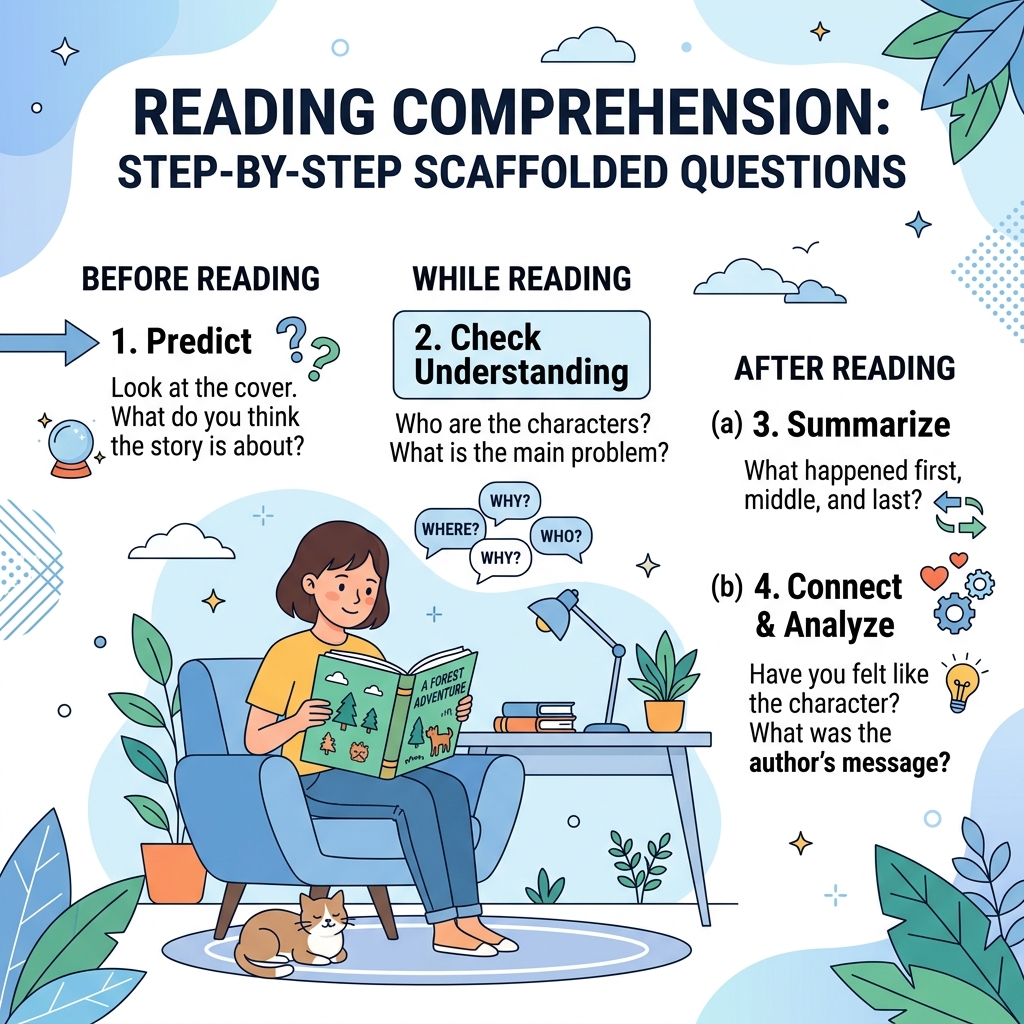
To build true reading comprehension, worksheets must scaffold questions to guide students from basic understanding to critical analysis.
1. Start with Literal Retrieval Begin with a few simple questions to verify that the student read and understood the basic facts of the text. This builds confidence.
2. Transition to Inferential Reasoning Next, include questions that require reading between the lines. Ask students to make connections, explain character motives, or predict outcomes based on textual evidence: - "Why does the author use this specific metaphor in paragraph 3?" - "Based on the text, what is the most likely cause of this event?"
3. Conclude with Critical Analysis End the worksheet with an open-ended short-answer prompt. Challenge students to evaluate the text, critique the argument, or connect the themes to other texts or real-world issues.
To save time, use a worksheet maker to generate scaffolded reading guides that contain a balanced mix of literal, inferential, and analytical questions.
Ready to save time on your next worksheet?
Generate a worksheet