How to Design Math Worksheets That Build Conceptual Understanding
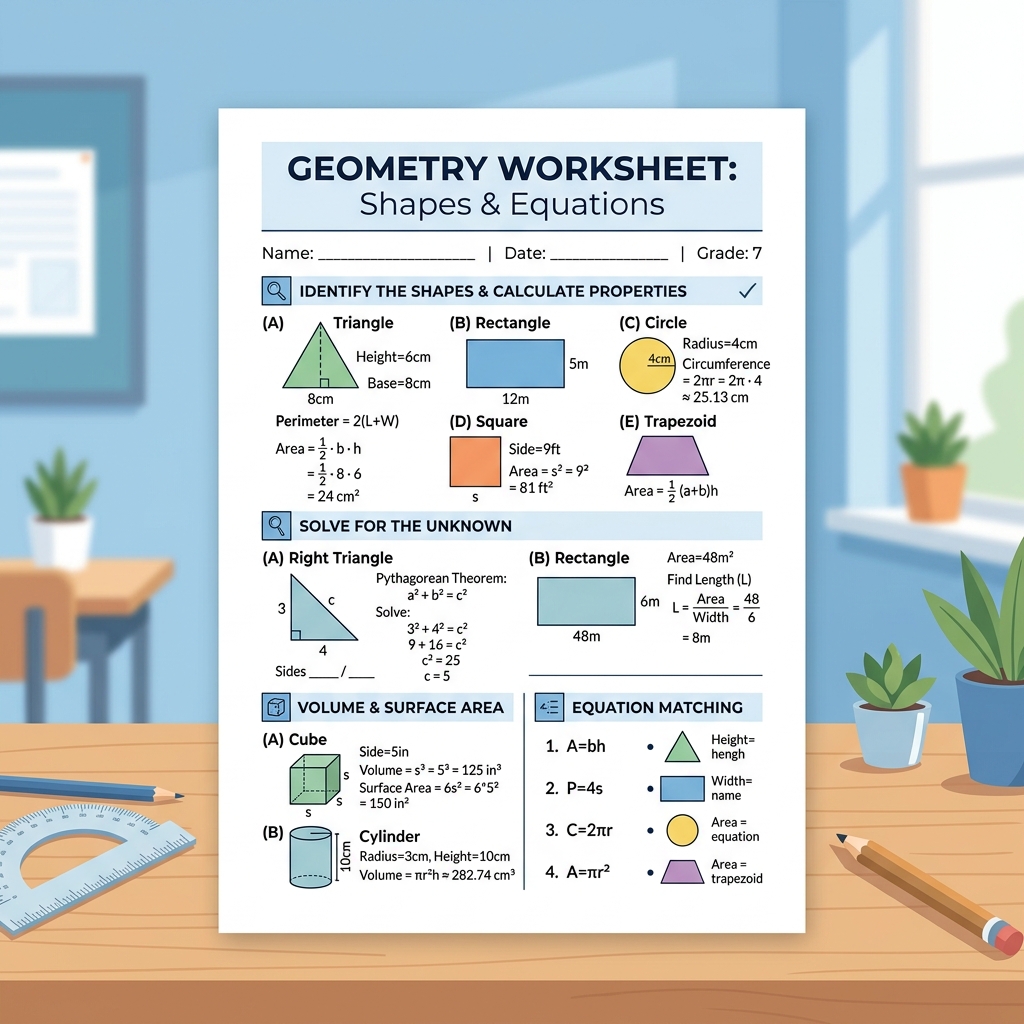
A common sight in math classrooms is a worksheet containing thirty identical computation drills. While practice is essential, repetitive drills often fail to help students understand the underlying mathematical concepts. They learn to follow a procedure mechanically without knowing why it works.
To build true mathematical literacy, worksheets must be designed to scaffold learning and build conceptual number sense.
1. Create a Scaffolded Progression
Start your worksheet with visual models or concrete representations. For example, when teaching fractions, begin with shaded circle models before transitioning to numerical fractions. Progress from simple calculations to more complex multi-step application problems.
2. Incorporate Diverse Question Types
Rather than only asking students to calculate answers, include conceptual questions: - "Explain why 1/2 is larger than 1/3." - "Identify the error in this worked-out problem." - "Write a word problem that corresponds to the equation 2x + 5 = 15."
3. Use Visual Aids and Space Out Content
A crowded page with small fonts increases cognitive load and can overwhelm students, particularly those who struggle with math anxiety. Keep layouts clean and provide ample whitespace for calculations. You can design structured, easy-to-read math worksheets automatically using our custom worksheet generator.
By designing worksheets that prioritize conceptual scaffolding over rote repetition, you can help students transition from mechanical calculators to critical math thinkers.
Ready to save time on your next worksheet?
Generate a worksheet