The 5-Minute Guide to Emergency Sub Plans for Teachers
It's 6 a.m., you have a fever, and you know you can't go in. The only thing worse than feeling sick is the thought of writing detailed plans for a substitute teacher before you can go back to bed.
Every teacher benefits from having emergency sub plans ready before they're needed. The goal is simple: activities students can complete independently, with minimal setup, that keep learning moving and don't create chaos for the substitute — or extra work for you when you return.
What makes a good emergency sub plan
Strong emergency plans share a few traits:
- Independent. Students can complete them without the teacher explaining new content.
- Review-based. They practice skills students already have, rather than introducing new material a substitute may not be able to teach.
- Clear. Instructions are short and written for students, so the sub can simply hand them out.
- Flexible. They work any time of year, or are easy to adapt to the current unit.
- Low on grading. They come with an answer key, so you're not facing a pile of ungraded work afterward.
Build an emergency folder once
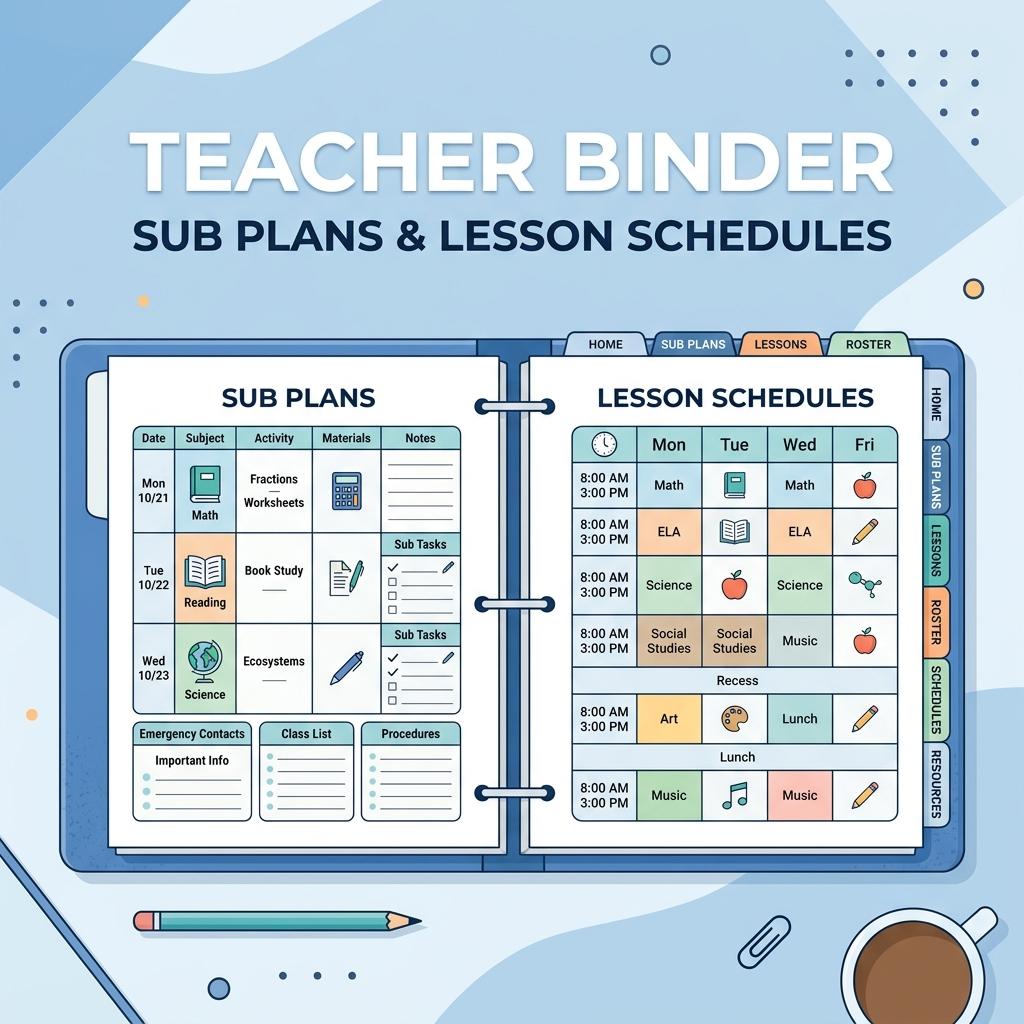
The best time to write sub plans is when you're healthy. Put together a folder (physical or digital) containing:
- A one-page sub guide: class schedule, seating charts, where materials are, procedures for attendance, bathroom passes and fire drills, and the names of a helpful colleague and a few reliable students.
- Two or three days of ready-to-go activities for each class.
- Answer keys for every activity.
- Any important student information the sub needs, such as medical or behavior notes, following your school's privacy rules.
Update it once a term so the content stays relevant.
Five-minute plans for the current unit
When you need something tied to what you're teaching right now, a quick structure works well:
1. A reading or review passage. Choose a short, grade-appropriate text related to your current unit — a textbook section students haven't fully read, or an article on the topic. Reading gives the class a calm, focused start.
2. A comprehension or practice worksheet. Pair the reading with questions: a few literal questions, a few that ask students to explain or apply, and one short written response. A worksheet generator can build this from your topic or from text you paste in, complete with an answer key, in about a minute — fast enough to do from your phone.
3. A short review quiz. End with a few questions on recent lessons. Students can check their answers with the key, or the sub can collect them so you can see how students did when you return.
4. An early-finisher task. Always include something for students who finish quickly: a vocabulary activity, a short writing prompt, or extension questions.
Tips that make the day smoother
- Write instructions for students directly on the worksheet, so the sub doesn't have to explain them.
- Keep the plan slightly longer than the period; running out of work is the most common cause of problems.
- Ask the sub to leave a short note on what was completed and anything that came up.
- Treat the work as practice, and use the answer keys to let students self-check when you're back.
The payoff
A ready emergency folder means a sick day can actually be a rest day. And when you return, students have practiced useful skills instead of watching a movie.
For more on protecting your time, see using AI to reduce teacher burnout.
Ready to save time on your next worksheet?
Generate a worksheet