Active Recall vs. Passive Re-reading: What the Research Says
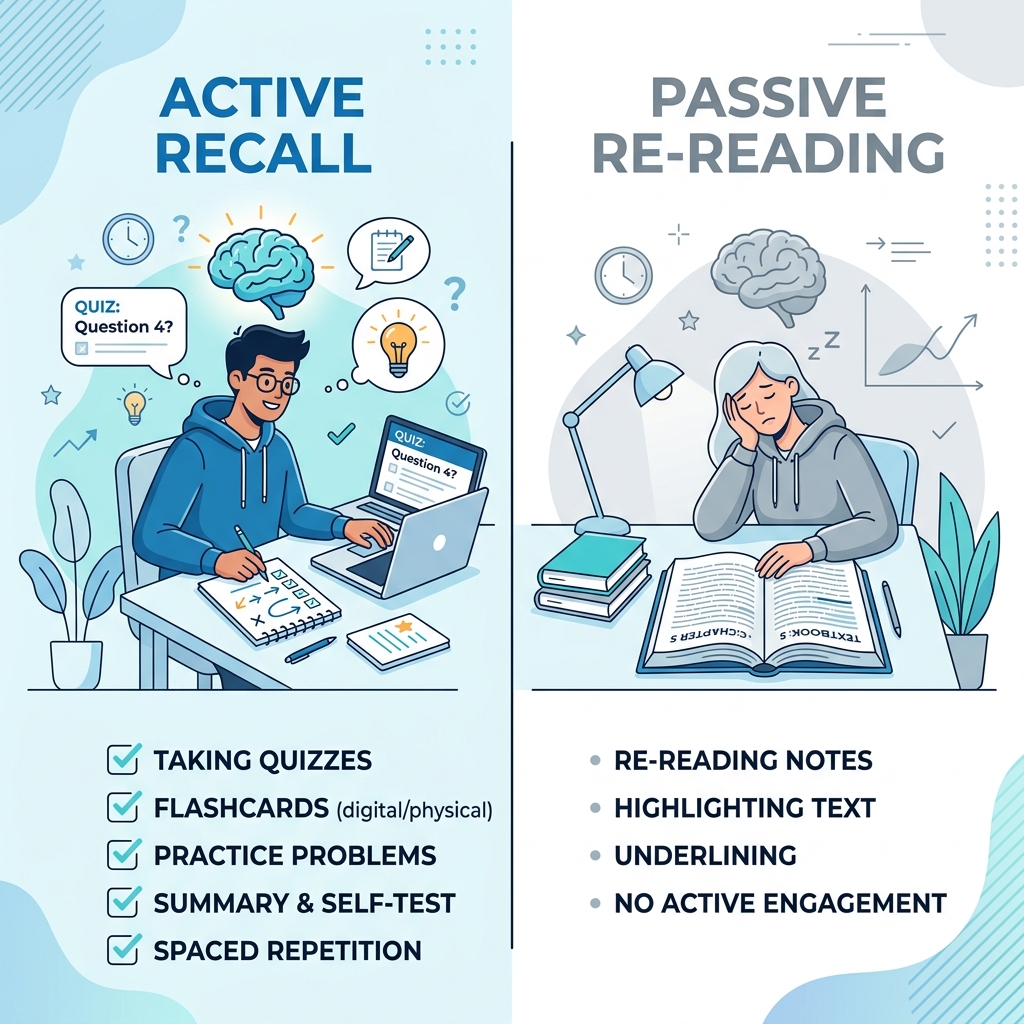
When preparing for a test, most students default to reading their textbook chapters or highlighted notes. They scan the pages repeatedly, believing that this familiarity translates to understanding. However, cognitive science has consistently shown that this is an ineffective study method.
Passive re-reading creates an illusion of competence. It feels easy, so students think they are learning, but they are actually failing to build strong retrieval paths in their brains.
The Power of Active Recall
Active recall involves testing yourself to retrieve information from memory without looking at the text. It forces the brain to retrieve facts, which strengthens neural pathways and aids long-term retention. This phenomenon is known as the "testing effect."
Here is how you can help your students transition from passive reading to active retrieval:
- Self-Quizzing: Encourage students to build practice questions as they read. After finishing a section, they should cover the page and attempt to answer their own prompts.
- Flashcards: Use digital flashcards that prompt the student to define terms or solve problems, rather than just reading lists of definitions.
- Dynamic Study Tools: Paste textbook sections directly into an AI tool like PDF to Quiz to instantly generate custom practice assessments.
Implementing Retrieval Loops
The key to long-term memory is spacing out retrieval sessions over time. A quick check of understanding immediately after reading is helpful, but repeating the check two days later is where real learning happens.
By shifting from passive review to active recall, students can study less while retaining significantly more.
Ready to save time on your next worksheet?
Generate a worksheet